
Data to
the people!
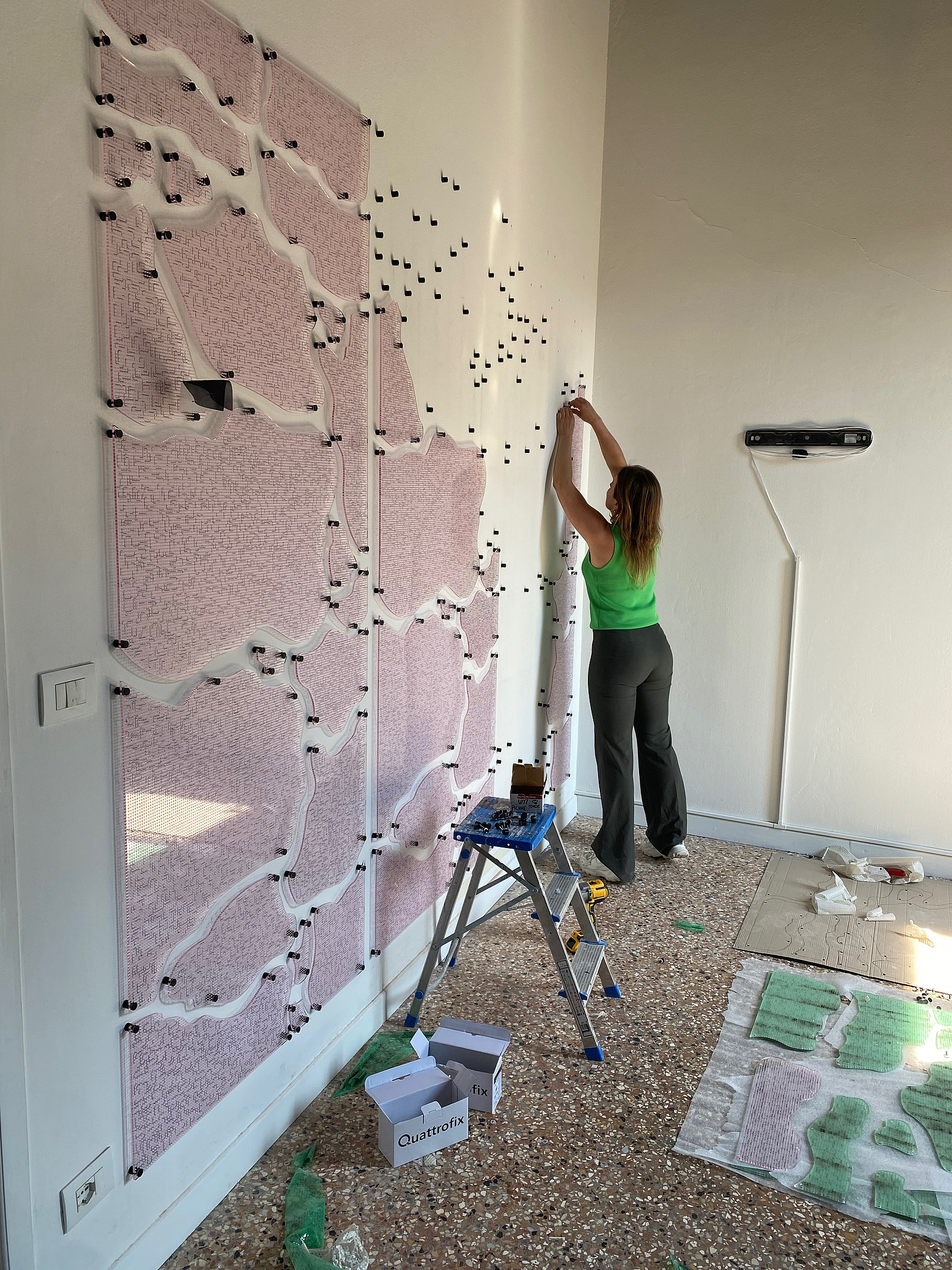
Julia working on "Mapping the Oblivion" – a series of works on what it means to be forgotten in a world that is built on data. (© Julia Janssen)
Julia, what work do you do at the foundation?
We do research on the illegal data practices of big tech corporations concerning our personal data. And we also perform mass claims or class action lawsuits against these companies to try to fight the market power that they anticipate. So, for example, we now have two cases running. One against Twitter, or X now, and one against Amazon. With Twitter, our most important finding was that they integrated an SDK, which is a cookie technology that allows them to collect data from over 30,000 free applications – even from people who have never had a Twitter account. Think of apps like the Weather Channel, Duolingo, Shazam, Happn, Grindr, Vinted, all these kinds of very big applications that a lot of people use. It’s very, very important to us to fight this kind of infrastructure.
How so?
The information Twitter is gathering is highly personal. Access to such data in the wrong hands can have a massive effect on bias in technology and unequal decision-making. It can lead to manipulation of people's will and of what they see online. This is why we have to fight that at a larger scale: not only on the level of all these companies but also on a more systemic scale. We need to give people more control and more power over their personal data.
You have already voted for this poll.
How much control do you think individuals currently have over their personal data online?
1: Almost no control
5: Full control
Do cookie banners make a difference here?
Sadly not. In 600 to 1000 websites we researched, we found that they also collect your data when you actively decline the cookies. That’s why we think it's very important to do these class action lawsuits. To us, they are not only an appeal to the public but also to the Federal Government.
How are these activities related to the principles of research data management?
My practice is really centered on personal data, but I think the methodologies in research data are similar. The concerns that we have are similar. It might seem like no big deal if one app knows my location at a certain point. When all the collected data is combined, it creates highly detailed profiles of individuals. However, these profiles can sometimes be inaccurate or incorrect. And that’s where it gets tricky.
What's the tricky part?
Information always comes with a context and there are big risks with information being processed out of context. So, if you know specific things about where I was or where I wasn't in relation to other pieces of information about me, it can lead to assumptions about my personality, which might be correct, but also might not be. I think both is quite scary. Everything that we do online, all the traces that we leave, also determine the choices and the chances that we get next. In research data as well, we need to be very much aware of what data we collect, how we categorize that data and how we ask questions of a system and what comes out of it. For example, if you label things in just two categories, male and female, healthy and unhealthy, it also excludes a lot of other things within those margins. So we need to ask ourselves questions such as: Are the people labeling and categorizing this data part of a diverse team? Are people asking diverse questions throughout the process? I think these kinds of principles that I've been studying in bias and technology are very important in all kinds of fields of data infrastructure and data research because it is super tough to make a complete or accurate representation of reality in data. There's always a choice that we make in the data set, in how we label something, and in what questions we ask.
Julia Janssen
is an artist and activist focused on data privacy, digital rights, and the impact of Big Data. Through her interactive projects, she raises awareness about data misuse. She advocates for transparency and personal control over digital identities. As an ambassador for the Dutch Data Protection Foundation, she challenges illegal data practices by major tech companies.
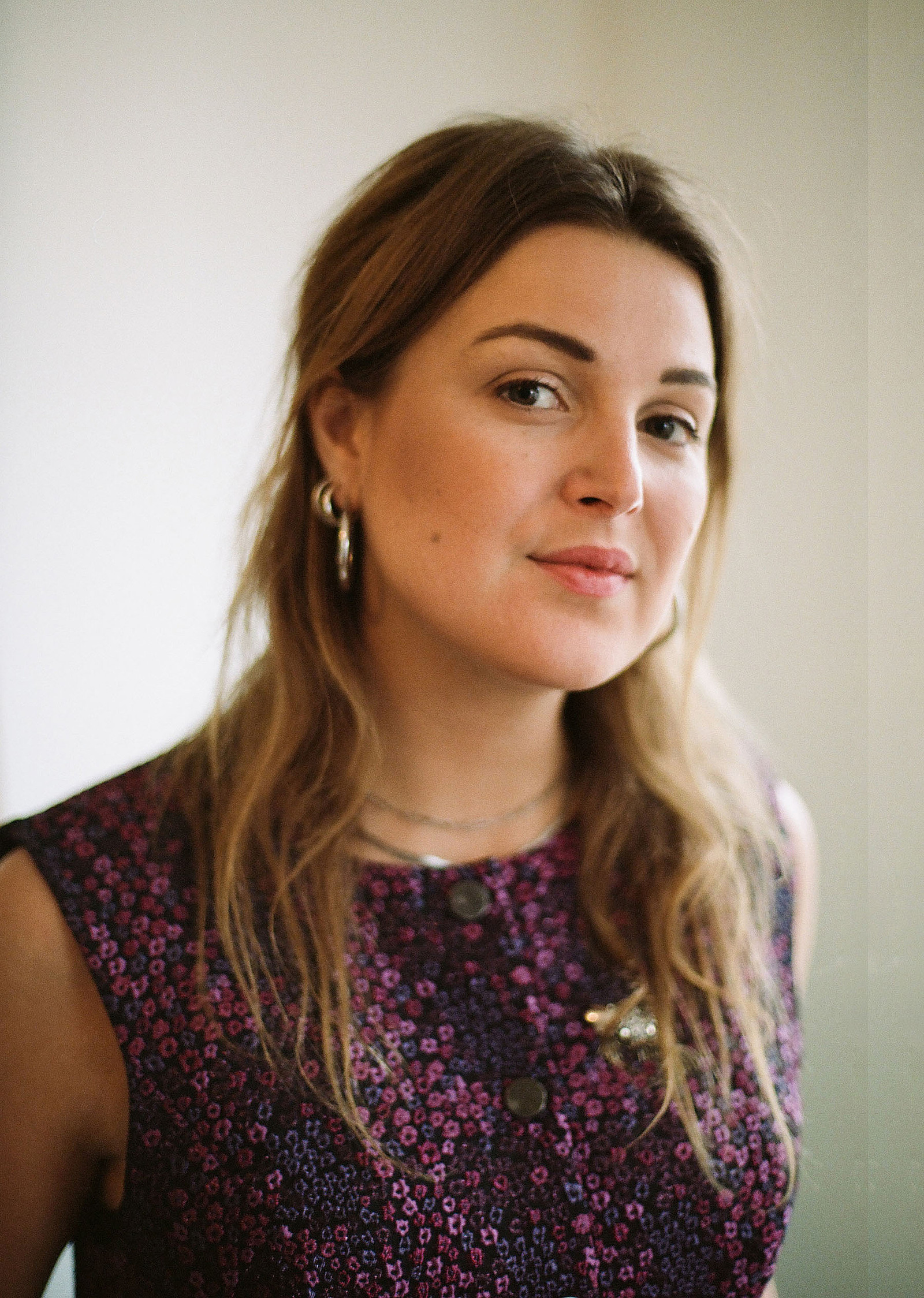
Julia Janssen is proof: Art and activism go hand in hand, when it's about data. (© Julia Janssen)

“Everything that we do online, all the traces that we leave, also determine the choices and the chances that we get next.”
Julia Janssen
Absolutely. This is true for science as well as in big tech. What are the current developments you observe here?
The GDPR has certainly made a difference. Before, corporations owned huge amounts of data. But now, it is not necessarily interesting or desirable to be the owner of a lot of data because we have so many rules and regulations and it's very easy to violate those. There is still room for improvement in these regulations, but they do have an effect. There is this interesting startup here in the Netherlands, called PacMac. They use healthcare data in machine learning to assist doctors and medical researchers. And they were founded at a time when everyone knew that GDPR was coming. So they knew it could cause them a lot of problems to be owners of data and they developed this new structure of accessing data, in which they do not own the data but can access it and also provide access to medical institutions in a collaborative way. That could also be an interesting approach to being less dependent on Big Tech in the healthcare sector, where they are very dominant players.
What is your perspective on data handling within the scientific community?
Within a lot of academic practices and sciences, we tend to separate all the challenges that we're facing and many people are working in their own domain only. Of course, it’s important to have specialists but I feel like the challenges we're facing are sector-overlapping. We might find solutions or partners in unexpected fields. I remember when I was in high school, I chose higher mathematics and art history, and my counselor advised against it because there would be no logical outcome or career from this combination. In the end, it was those skills that were the foundations of my practice today, where, as an artist, I fight for data protection and digital rights. I believe that very important findings can come by combining information, data, resources or questions that before had no relationship with each other.
What research data management tools do you prefer to use in your work?
Well, to be honest, I make my own kind of systems for this.
That's amazing. Please tell uns more!
I'm trained as an artist and not as an academic researcher. But I think most of the research I do is within the academic field and especially within information law and legislation and in the geopolitical field. A lot of these infrastructures or programs we use give a lot of freedom, but they also set some kind of framework to work within. I like to go beyond these frameworks. For me, it's also about creating art installations and not getting to the complete core of anything. I’m interested in the overlapping theories and in what is most important to share with people in an accessible way. To me, data provenance is where it all comes together.
Why is data provenance so relevant to you?
It’s a very interesting field where you can look at the lifespan of a piece of information. You can make information traceable over time and space in the internet. For example, when data was produced, with whom it was shared or when maybe value was added or taken from it. With misinformation and the challenges that we're facing in this regard, we can also ask with what reason or incentive data was produced or shared, and whether it was manipulated or not.
Where do you see room for improvement in data management?
Sometimes, it's just the very simple and basic question of if and what technology is needed to solve a problem. I think sometimes we tend to lean towards seeing innovation per se as something good and using technology and data as an improvement. I'm sorry to say that in this context, we need to also question whether that really is what we need to solve a certain problem. Moreover, I think from every type of data set, you can have so many different types of answers depending on what you're looking for and who’s asking the questions. We need to be very much aware of that.
Frage 1
Where should we look for solutions to protect personal data?
She explicitly says that legal frameworks like GDPR have already made a real difference and changed how companies handle data, even though improvements are still needed.
“The GDPR has certainly made a difference… there is still room for improvement in these regulations.”
Her foundation’s main work is conducting class-action lawsuits against big tech companies, and she presents these actions as essential to fighting harmful data practices.
“we also perform mass claims or class action lawsuits… it’s very important to do these class action lawsuits.”
She actually warns against assuming that more technology or innovation automatically solves problems. Instead, she argues that we must question whether technology is even the right solution in many cases.
“we need to also question whether that really is what we need to solve a certain problem.”
While she mentions new data-access models as interesting, she does not promote technological innovation itself as the main path to protecting personal data.
Her entire practice combines art, research, and activism to raise public awareness about data misuse and empower people to regain control over their personal data.
Auswertung
richtig beantwortet!
About the project
In collaboration with the Dutch Privacy Foundation, Julia Janssen participates in collective legal actions through research and class-action lawsuits aiming to empower individuals with control over their personal data.

